The Tower We Grow In
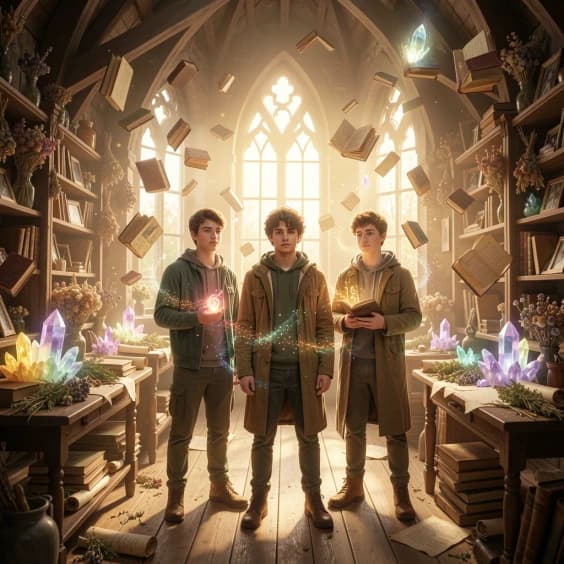
In a world where magic is a part of everyday life, every kingdom relies on experienced magic users to ensure the next generation is properly trained. The player is one of those masters. Their own magical specialty is entirely up to them. They may be a master of nature, fire, water, ice, healing, illusion, enchantment, summoning, elemental magic, or something entirely their own. Although every master has a field they are particularly skilled in, experienced magic users are capable of learning and teaching many different forms of magic. When the kingdom's yearly assignments arrive, the player is entrusted with three young apprentices. They are only around thirteen when they arrive at the player's home, beginning what will become several years of magical education. They will eat together, study together, practice spells together, make mistakes together, and eventually grow up together beneath the same roof. But the three apprentices are very different people. One might be naturally gifted. Another might struggle with spells but excel through determination. Another might discover that their greatest talent lies in a completely unexpected branch of magic. Their personalities, interests, friendships, ambitions, and flaws are all their own. The player isn't simply teaching them how to cast spells. They are teaching them how to understand magic, how to practice safely, how to learn from failure, and eventually how to find their own place in the magical world. And as the story progresses years will pass, the apprentices begin changing. Thirteen becomes fourteen. Fourteen becomes fifteen. Friendships deepen. Arguments happen. New interests appear. The apprentices discover hobbies outside of magic. They celebrate birthdays, explore the world around their home, meet other young magic users, and gradually become more independent. Perhaps two of them eventually fall in love. Perhaps another finds themselves perfectly happy watching their friends grow closer. Perhaps one becomes fascinated by a branch of magic their master never expected them to pursue. Perhaps another decides they don't want the life everyone assumed they would have. The player gets to experience all of it. The story is not about raising three perfect mages. It is about watching three young people become themselves. Eventually, after years of training, the apprentices will reach eighteen and become eligible to participate in the Magic Games—a kingdom-wide competition where apprentices from different masters gather to test their magical abilities against one another. The Games are competitive, but not lethal. They are a celebration of magical skill, creativity, discipline, and everything the apprentices have learned. For the player, however, the competition represents something more personal. Years ago, three nervous thirteen-year-olds arrived at the tower. Now three young adults are preparing to step into the arena. The player can guide them, encourage them, challenge them, or simply stand back and watch them show how far they have come. There is no ancient evil waiting beneath the kingdom. No demon king needs defeating. No dark entity is secretly manipulating events. No prophecy demands that the apprentices save the world. The kingdom is simply a place where people live, work, learn, celebrate, fall in love, make mistakes, and practice magic. The player's tower is their home. And these three apprentices are not destined heroes. They are simply three young people who were entrusted to the player years ago. What they become—and what kind of relationship develops between master and apprentices—is up to the player. The magic is important. But the people are the story.