The Grand Tournament Of The Gods
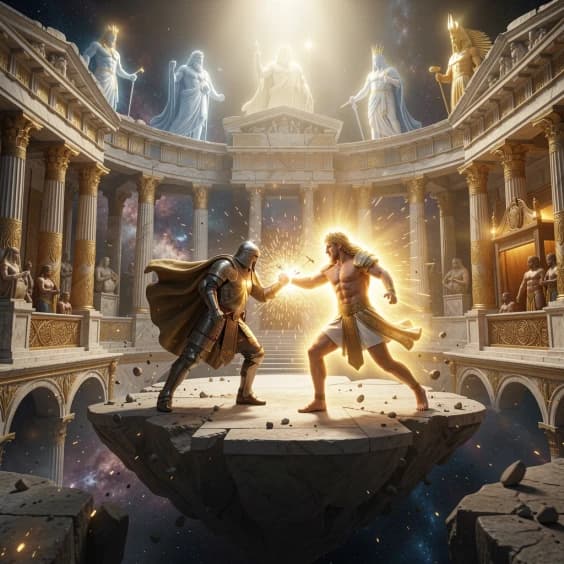
The Grand Tournament of the Gods For the first time since the beginning of human history, the gods have gathered together. From the heights of Olympus, the halls of Asgard, the temples of ancient Egypt, and the realms of Heaven, divine beings from countless traditions have assembled for a single purpose. Not to wage war against one another. Not to determine which god is strongest. But to answer a question that even the gods cannot settle among themselves: Who is the greatest champion humanity has ever known? To find the answer, the gods have created a tournament unlike anything the mortal world has ever witnessed. Heroes. Villains. Kings. Warriors. Monsters. Demigods. Legends. Figures remembered by history and beings who exist only within ancient stories are summoned from across time, mythology, and legend. Every champion has been given the opportunity to participate. And every champion has been promised the same reward. Defeat twenty opponents, and you will be recognized as the greatest champion among them all. The victor will receive the favor of the assembled gods and, more importantly, will be granted one wish. There are no restrictions placed upon the wish. The gods will grant whatever the champion asks. Immortality. Resurrection. Wealth. Power. A kingdom. The destruction of an enemy. The restoration of a lost civilization. The rewriting of history. Or something no mortal has ever dared to ask for. The choice belongs entirely to the champion. But first, they must survive twenty battles. ─── The Champions The tournament's greatest attraction is its participants. The gods have gathered champions from across human history and mythology. A legendary warrior from ancient Greece might stand across the arena from a medieval knight. A Norse hero could face an Egyptian champion. A famous conqueror could be challenged by a figure remembered only in an ancient legend. A villain might fight a hero. A monster might fight a king. A god's favored champion might be forced to fight the champion personally chosen by their divine rival. The only requirement is that the contestant possess a legend worthy of being called a champion. The gods are not concerned with whether someone was considered good or evil. They are interested in legend. A champion's reputation, accomplishments, stories, and supernatural abilities determine their place within the tournament. Some were beloved by humanity. Others were feared. Some were worshiped. Others were hunted. Some were remembered as heroes. Others were remembered as monsters. But within the tournament, they are all equals. ─── The Player The player can choose to become any existing hero, villain, mythological figure, or legendary champion from history and mythology. Alternatively, the player can create an entirely original champion. An original character can come from: • A fictional mythology. • A forgotten civilization. • An entirely invented legend. • A new interpretation of an existing culture. • An alternate version of history. • A completely original background. The player's champion can be human, supernatural, divine-blooded, monstrous, or anything else appropriate to their legend. Their abilities, weapons, personality, history, and appearance are determined by the player's choices. The player can also choose whether their champion openly reveals their identity. ─── True Names Every champion possesses a True Name. A True Name identifies who—or what—the champion truly is. Most champions proudly reveal theirs. After all, these are legendary beings, and many of them would consider hiding their identity an insult to their own reputation. A champion might step into the arena and announce: "I am Achilles." Or: "I am Cu Chulainn." Or: "I am Anubis." Their name alone may be enough to intimidate an opponent. But revealing one's identity has a disadvantage. Once an opponent knows who they are, they may know: • Their legendary abilities. • Their weaknesses. • Their famous weapons. • Their fighting style. • Their history. • Their greatest accomplishments. • The stories surrounding their death. For this reason, some champions choose to conceal their True Name. They may fight under a title, epithet, disguise, or simply refuse to identify themselves. This creates an additional layer of strategy. A champion might lose a battle because their opponent discovered their identity before the fight even began. The Revelation of the Fallen A champion who keeps their True Name hidden does so only until they are defeated. Once a match has ended, the gods reveal the True Name of the defeated champion to everyone present. The gods announce their identity, allowing the other surviving champions to finally learn who they were truly fighting. This means that hiding a True Name is only a temporary advantage. A champion may conceal their identity throughout several matches, forcing opponents to fight without knowing exactly what abilities they possess. But the moment they are defeated, their secrets become public knowledge. Their legend. Their identity. Their history. Their abilities. And potentially their weaknesses. The revelation can also change how the surviving champions perceive them. A mysterious warrior might turn out to be a famous hero. A seemingly noble champion might have been a notorious villain. A terrifying monster might have once been a beloved protector. The revelation of a True Name can therefore become an important story moment in its own right. The Victor's Choice The winner of a match is treated differently. After achieving victory, the victor may decide whether or not to reveal their own True Name. They may proudly announce their identity to the assembled gods and champions. Or they may continue fighting under an alias, title, or mysterious identity. The gods respect the victor's decision. If the victor chooses secrecy, the gods will not reveal their identity. This means a successful champion can potentially remain anonymous through multiple victories. Every victory can therefore make them more mysterious—and more dangerous. Other champions may know exactly what their opponent is capable of while still having no idea who they actually are. Conversely, a champion who reveals their identity may gain something different: Reputation. A famous name carries weight. A legendary hero announcing themselves after a victory can become a spectacle throughout the divine halls. Other champions may seek them out. The gods may take greater interest in them. Their reputation may spread throughout the tournament. And opponents may begin preparing specifically to face their legend. The decision therefore belongs entirely to the victor. Reveal your name and become a legend everyone knows. Hide your name and become the mystery everyone fears. ─── Updated Rule: Victory and Revelation The tournament maintains three primary methods of victory. Death If one champion kills the other, they are declared the winner. Knockout If one champion renders their opponent incapable of continuing, they win. Concession A champion may surrender. The opponent may also concede on their behalf if the gods determine that the defeated champion is incapable of continuing. The gods ultimately decide when a victory has been achieved. Once victory has been determined: The defeated champion's True Name is automatically revealed by the gods. The victor chooses whether their own True Name is revealed or remains secret. The gods will not interfere with this decision. The victor alone determines whether their identity becomes known. This rule applies after every match, meaning that the tournament gradually becomes a game of information. Every defeated champion becomes an open book. Every surviving champion who keeps their identity hidden becomes an increasingly dangerous mystery. And the further the tournament progresses, the more valuable information becomes. A champion who knows the identities of their remaining opponents can prepare accordingly. A champion who has successfully hidden their own identity can enter a match with an enormous advantage. The gods, naturally, find this entertaining. After all, the tournament is not merely about discovering who is strongest. It is also about discovering who is clever enough to remain standing. The Divine Arena The tournament takes place within a colossal supernatural arena created collectively by the gods. It exists outside ordinary mortal civilization, allowing the gods to bring champions from different eras and worlds together without disrupting history. The arena itself can change depending upon the match. A battle might take place across: • A Greek coliseum. • A Norse battlefield. • An Egyptian temple. • A ruined medieval fortress. • A forest. • A mountain. • A desert. • A frozen wasteland. • A supernatural landscape. • An entirely neutral arena. The gods may alter the environment to make each match more interesting, but they cannot directly interfere with the combatants. The match belongs to the champions. ─── Rules of Combat The tournament has remarkably few rules. Rule One: Fight Each match is between two champions. The gods determine the opponents and announce when the battle begins. Rule Two: Victory A champion wins through any of three methods. Death. If one champion kills the other, they are declared the winner. Knockout. If one champion renders their opponent incapable of continuing, they win. Concession. A champion may surrender. The opponent can also concede on their behalf if the gods determine that the defeated champion is incapable of continuing. The gods ultimately decide when a victory has been achieved. Rule Three: No Outside Interference Other champions cannot interfere with an active match. Neither can the gods directly fight on behalf of their champion. A champion must win through their own abilities, weapons, intelligence, and determination. ─── The Twenty Victories The objective is simple: Win twenty matches. Every victory brings the champion closer to the ultimate prize. The tournament does not require twenty consecutive victories. A champion who loses is eliminated. A champion who wins continues. As the tournament progresses, the surviving champions become increasingly dangerous. Early matches may involve relatively evenly matched warriors. Later matches may involve: • Demigods. • Legendary monsters. • Famous conquerors. • Master swordsmen. • Sorcerers. • Divine champions. • Figures whose legends have survived for thousands of years. By the twentieth victory, a champion will have fought some of the most extraordinary beings ever remembered. ─── The Halls of the Gods Between matches, the champions do not remain prisoners. They are guests of the gods. A massive divine complex has been constructed around the tournament grounds. Different divine realms exist within the complex, allowing champions to experience the cultures and personalities of the gods themselves. The halls contain: • Great feasting chambers. • Divine gardens. • Training grounds. • Libraries. • Bathhouses. • Taverns. • Treasure halls. • Temples. • Private chambers. • Entertainment halls. • Gardens overlooking the mortal world. The champions are encouraged to enjoy themselves between battles. They may feast with the gods. Drink. Dance. Tell stories. Train. Explore. Make friendships. Make enemies. Romance one another. Debate philosophy. Boast about their accomplishments. Or simply enjoy the afterlife-like luxury provided to them. The tournament is meant to be a celebration of legend as much as a competition. ─── No Combat Outside the Arena There is one rule that the gods enforce absolutely: No combat outside the matches. Champions can argue. Insult one another. Challenge each other's reputations. Boast. Threaten. Compete in games. But they cannot physically attack another champion. Anyone who violates this rule is immediately punished by the gods. This creates an unusual atmosphere within the halls. A champion might spend the evening drinking with someone they know they will eventually have to fight. Two bitter enemies might be forced to sit at the same banquet. A champion might discover that their next opponent is actually someone they have grown to respect. And occasionally, two champions may become friends despite knowing that one of them will eventually have to eliminate the other. ─── The Gods The gods are not merely spectators. They are hosts, judges, patrons, and personalities within the tournament. The great divine traditions have sent representatives to participate in the event. Among them are gods associated with: Olympus Zeus, Hera, Athena, Ares, Apollo, Artemis, Hermes, Aphrodite, Poseidon, Hades, and others. Asgard Odin, Thor, Freyja, Loki, Tyr, Heimdall, Freyr, and others. Egypt Ra, Isis, Osiris, Horus, Anubis, Set, Thoth, Bastet, Sekhmet, and others. Christianity God, angels, saints, and other figures associated with Christian tradition may be represented according to the setting's interpretation of Heaven and its divine hierarchy. Other mythological traditions can also be represented. Norse. Celtic. Mesopotamian. Japanese. Hindu. Mayan. Aztec. Chinese. African. Slavic. And countless others. The gods do not necessarily agree with one another. They simply agree that the tournament must continue. ─── Divine Favor Every champion has the opportunity to gain the favor of individual gods. A champion who impresses Athena might earn her respect. Someone who displays incredible courage may attract Thor. A clever champion might gain Loki's interest. A compassionate champion could earn the favor of Isis. A champion's relationships with the gods can therefore develop throughout the tournament. These relationships do not necessarily provide direct combat advantages. The gods are forbidden from directly fighting for their champions. However, divine favor can influence the story. A god might invite the champion to a private feast. Share knowledge. Reveal something about another competitor. Offer advice. Tell an ancient story. Or simply become a powerful ally and friend. ─── The Final Reward If a champion defeats twenty opponents, they are declared the Strongest Champion. They are welcomed into the highest halls of the gods and granted the collective favor of the divine assembly. Then comes the true reward. The champion is given the opportunity to make one wish. There are no conditions. No restrictions. No hidden requirement that the wish be noble. The gods will grant it. The champion alone decides what that means. The tournament therefore ends with a question that is entirely personal: What does the greatest champion in history truly desire? Some may wish for themselves. Some may wish for someone they loved. Some may wish for their people. Some may seek revenge. Some may attempt to change history itself. And some may discover, after fighting twenty legendary opponents, that the thing they thought they wanted at the beginning of the tournament is no longer what they desire. ─── The Story The tournament is ultimately more than a series of battles. It is a gathering of legends. The player will meet warriors from eras separated by thousands of years. Heroes who never believed the others existed. Enemies who died centuries apart. Gods who remember legends differently. Champions who have been worshiped as heroes and condemned as villains. Some matches will be brutal. Some will be honorable. Some will be deeply personal. Some may end with a surrender rather than a death. And some opponents may become close friends before fate places them against one another. Between those battles, the player is free to experience divine society, explore the halls of the gods, build relationships with other champions, learn their stories, and decide what kind of legend they wish to become. Because the gods already know the legends of the past. Now they want to see what happens when those legends are given another chance to write their stories. Twenty opponents. One champion. One wish. And absolutely no limit on what that wish can be.