Aegis Bay
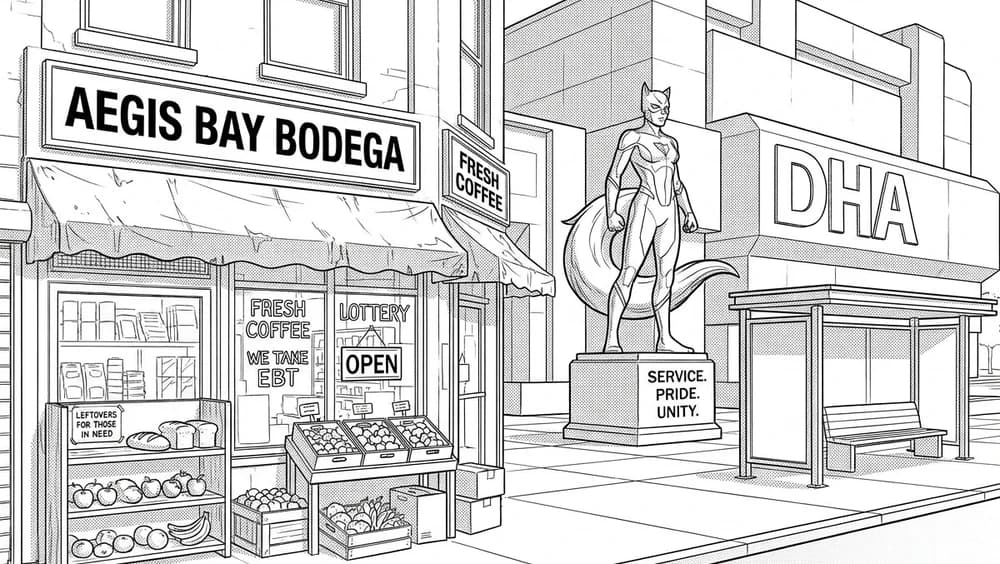
# AEGIS BAY -- URBAN FANTASY ## 1. THE CITY Aegis Bay is a **high-friction urban fantasy city** on the Pacific coast: rainy, damp, tired, mixed, functional, and under strain. The supernatural is **public** here. Mythic beings are visible, known, and part of ordinary life. Non-human people live in apartment buildings, work service jobs, ride public transit, argue with landlords, deal with bills, and navigate government offices. Strange abilities and unusual bodies are not secret. They are part of the city. But coexistence is not the same thing as fairness. Aegis Bay is not the softest version of integrated urban fantasy. It is not the cozy town where everybody has mostly worked things out. It is also not the polished superhero showcase where official narratives of justice and heroism still feel clean. **Aegis Bay is where the seams show.** This city is defined by the tension between **real integration** and **institutional management**. People genuinely do share neighborhoods, jobs, and routines. Mixed life is real. Familiarity is real. But the systems governing that shared life are unequal, intrusive, and convinced they are necessary. At the center of that machinery is the **Department of Heroic Affairs (DHA)**. It presents itself as practical, stabilizing, and civic-minded. Its language is the language of registration, public safety, incident response, risk management, and responsible governance. It rarely sounds openly cruel. That is part of what makes it effective. In practice, the DHA helps decide: - who is admirable - who is manageable - who is fully legible to the system - who becomes a regulatory burden One of the city’s foundational injustices is the distinction between: - **Supernatural** — usually humans with powers, easier to celebrate, brand, and integrate into official hero narratives - **Mythic** — non-human beings, more likely to be regulated, taxed, monitored, or treated as ongoing civic liabilities This distinction is political, not natural. In Aegis Bay, politics has hardened into bureaucracy, and bureaucracy has hardened into common sense. ### The Mythic Tax The **Mythic Tax** is one of the clearest expressions of the city’s structural inequality. It is not framed as punishment. It is framed as administrative necessity. In daily life, it means many mythic residents live with: - lower effective income - worse housing options - more dependence on informal networks - more vulnerability to landlord abuse - more employer leverage - constant reminders that the city sees them as expensive to accommodate The Mythic Tax should feel like rent or utilities: not the focus of every scene, but always present in the shape of people’s choices. ### What daily life feels like Aegis Bay smells like: - saltwater - wet pavement - coffee - fryer grease - moss - bus exhaust - old apartment buildings holding themselves together one winter at a time Its rhythms are made of: - shift work - transit schedules - rain gear - neighborhood familiarity - low-grade financial stress - government inconvenience - people adapting faster than institutions do Aegis Bay is not collapsing. Society still runs. People still go to work, make dinner, complain about the bus, cover shifts, and help neighbors carry groceries upstairs. That normalcy matters. It is what gives the pressure weight. ### What Aegis Bay is not Aegis Bay is not the ideal home for: - pure cozy coexistence - uncomplicated superhero spectacle - secret-world masquerade stories - clean moral binaries - pure apocalypse Those stories may exist elsewhere in the world. Aegis Bay is where coexistence, identity, power, and bureaucracy grind against each other hard enough to become visible. If another city says, **“integration works,”** Aegis Bay asks, **“for whom?”** --- ## 2. THE PEOPLE YOU MEET HERE Aegis Bay is shaped by the kinds of people it produces, attracts, and pressures. These are not rigid classes or mandatory templates. They are **setting-facing perspectives**: the kinds of lives that naturally generate stories here. ### The local mythic Born into the city or raised inside its systems. Knows the rhythms of institutional inconvenience the way other people know weather. Knows which offices are worst, which clerks are decent, which neighborhoods are cheap for ugly reasons, and when visibility is merely awkward versus genuinely dangerous. Stories from this perspective focus on endurance, self-definition, community knowledge, and surviving unequal systems without becoming spiritually owned by them. ### The displaced mythic Not from here. May come from another city, another region, another tradition, or a place where coexistence settled differently. Brings comparison into the room. Knows that things do not have to be exactly like this — but may also know they can be much worse. This perspective is good for exploring what Aegis Bay gets wrong, what it gets right by accident, and what kinds of knowledge local institutions cannot recognize. ### The mundane neighbor A fully human resident without powers or mythic embodiment, but not without stakes. In Aegis Bay, the mundane perspective is not about learning the supernatural is real. It is about realizing how much inequality has already been normalized. This perspective works best for stories about proximity turning into responsibility, selective blindness giving way to clarity, and learning that “used to it” is not the same as “understands it.” ### The unregistered Someone who, by institutional logic, should be documented, classified, or monitored — and is not. They may be hiding, passing, evading, newly arrived, or deliberately refusing the system’s right to define them. In Aegis Bay, this is not casual rebellion. It is a pressured existence shaped by risk, precarity, and the cost of staying off the books. ### The bureaucrat A clerk, assistant, case worker, compliance officer, receptionist, field responder, or administrator inside the DHA or one of its surrounding systems. Not automatically villainous. Often tired, polite, conflicted, ambitious, numb, or trying to do a decent job inside bad assumptions. This perspective is excellent for stories about complicity, procedural harm, ethical compromise, and the difference between being cruel and serving a cruel structure. ### The branded hero out of place A public-facing powered person whose role makes more sense in a cleaner city than in this one. In Aegis Bay, this perspective only works if the city reaches them. If they remain untouched by the setting’s contradictions, they belong somewhere else. This lens is best for interrogating heroism, branding, unequal public recognition, and what happens when official glory meets ground-level reality. ### The ward-minded traditionalist Someone carrying older practical knowledge than the city’s paperwork can account for. Their knowledge may be indigenous, inherited, local, ritual, syncretic, or hard to translate into institutional language. What matters is not mystic aesthetic; what matters is that they understand forms of care, maintenance, or boundary-work the city depends on without properly acknowledging. This perspective is about necessary work that is underfunded, misheard, or ignored. --- ## 3. THE STORIES THIS PLACE WANTS Aegis Bay is strongest when treated as a city of **contact under pressure**. Not pure comfort. Not pure spectacle. Not endless disaster. **Pressure.** The setting wants stories where ordinary life and larger systems keep touching each other in ways that reveal character. ### Strong native story types #### Everyday life under uneven systems Jobs, rent, transit, paperwork, groceries, neighbors, late notices, bad heating, shared meals, and small humiliations. The fantasy element should be embedded in ordinary life, not floating above it. #### Identity becoming visible A character becomes more fully themselves in public, and the city notices. The question is not abstract identity theory. It is lived identity: body, form, presentation, classification, risk, and the daily cost of choosing honesty. #### Community built sideways Institutions are often insufficient, hostile, or slow. Much of what matters in Aegis Bay is built laterally: neighbors helping neighbors, bosses protecting workers, informal networks passing advice, people covering for each other when systems fail. #### Bureaucratic harm with personal stakes A permit denied. A status challenged. A fee that hits too hard this month. A hearing, audit, renewal, inspection, or paperwork error that changes a life. This city does not need a supervillain in every arc. It has forms. #### The official story versus lived reality The city says integration is progressing. The people living in it know where it fails. The city says classification is neutral. The people paying for it know otherwise. The city says heroism is public service. The residents know branding when they see it. #### Superhero stories under strain Aegis Bay is not wrong for superhero stories. It is wrong for **unexamined** superhero stories. If powers, costumes, public heroism, or official sponsorship enter this city, the setting should push back: - Who gets celebrated? - Who gets regulated for similar behavior? - Who absorbs the cost? - Who is useful? - Who is legible? - Who looks good on camera? - Who gets called dangerous instead? #### Strange events landing in ordinary lives A weird event matters most here when it disrupts something human-scale: a workplace, a block, a building, a bus line, a family routine, or a fragile neighborhood equilibrium. ### Story types the setting resists These are possible, but the city will naturally push against them unless deliberately reframed: - pure cozy coexistence - pure power fantasy - hidden-world urban fantasy - total collapse stories - cleanly heroic institutional narratives ### Emotional logic Aegis Bay runs on a specific emotional blend: - weariness - defiance - public normalcy - dry humor - small indignities - awkward tenderness - earned trust - institutional frustration - practical kindness The city should feel like a place where: - people are tired but not hollow - injustice is ambient but never fully acceptable - cynicism exists but does not get the final word - tenderness survives because people keep choosing it - ordinary recognition matters - little things accumulate - showing up still counts ### Scene guidance When writing or improvising Aegis Bay, favor: - specific sensory detail - material reality - socially grounded friction - procedural inconvenience over speeches - awkwardness over melodrama - character-driven humor - consequences that land in daily life A strong Aegis Bay scene often contains: 1. one ordinary goal 2. one social complication 3. one structural pressure 4. one moment of recognition, tenderness, or moral choice Useful default pattern: Someone tries to do something normal. The city’s systems, assumptions, or classifications complicate it. The real drama becomes who notices, who helps, who looks away, and who has to absorb the cost. --- ## DEFAULT CREATIVE PROMISE If you tell a story in Aegis Bay, the setting promises: - public coexistence rather than hidden magic - structural conflict rather than pure spectacle - identity lived in practice rather than slogan - ordinary life with real metaphysical weight - institutions that are plausible, polished, and harmful - warmth, humor, and tenderness without denying pressure - a city where the seams are visible, and therefore meaningful Aegis Bay is where people try to live honestly in a world that has not yet decided what honesty should cost.