Lore Cards and a smarter Story Engine
The story engine behind TalesRPG has been upgraded, and your worlds now have a place to live outside the main prompt. Here is what changed and what it means next time you play.
What the upgrade changes
The upgrade is two large parts along with smaller stroy engine tweaks and bugfixes. You choose whether each one runs in a playthrough.
Scene Plan gives the storyteller a moment to think before it writes. It works out what the scene is for and where it should land, then writes it, so a response goes somewhere instead of wandering, this usually results in more detailed and nuanced storytelling.
Lore Cards gives a story a real memory. What happened in earlier chapters is kept as entries the storyteller can look up when they matter, instead of hoping everything important stays in view at once.
Turn Scene Plan off and you get the engine mostly as it was before, which is still there if you prefer it.
Did it actually help
Hands-on play is still how a change gets judged first. On top of that, this upgrade went through an automated benchmark.
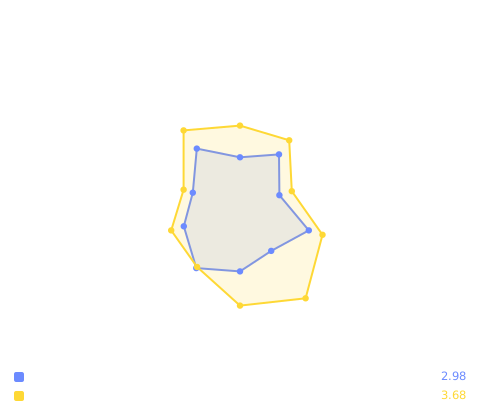
The benchmark ran with exactly these two parts switched on. Five adventures were each played twice, once with the upgrade and once without, with the same actions and the same dice: Island Arena, Last Stand, Legends of Virelia, DAWN 2055 and Adventurers of the Broken Continent. Claude Opus 5.5 and GPT-6, two of the strongest models available today, then graded every chapter without knowing which version wrote it. Across ten measures of story quality the upgraded version scored 3.68 against 2.98, ahead on nine of the ten.
The gains land where stories usually break. The pebble you pocket in chapter 1 is still a pebble in chapter 12 instead of a prophesied relic, actions that should fail do fail and the cost follows you, and the prose leans on fewer stock phrases. The method behind it is covered separately in ai roleplay benchmark.
Lore Cards keep your world straight
A Lore Card holds one thing: a location, a character, a faction, an item, a piece of lore or a game rule of your own. The storyteller looks a card up when that thing comes up in play, so your world stays consistent without you restating it in every prompt.
Cards are faster to make than they sound. Write your main prompt as usual and generate cards from it in one step, and the prompt gets trimmed as the details move onto the cards. You can also pull in cards you already wrote for your other stories, so a city or a rival you like can travel between worlds.
More cards appear as you play, discovered from the story itself. Free accounts carry 30 Lore Card memories per playthrough and 20 when creating a story. With a subscription that rises to 80 and 60. Lore cards also transfer to next story parts and Endless mode improving consistency of your adventure.
Change your settings in the middle of a story
Story Settings is now available during play, not only when you create an adventure. Open it, change difficulty, response length, or which narrative modules are running, and the changes take effect when the next chapter begins. Until then they sit as scheduled changes you can discard if you change your mind.
The same panel shows where the story stands: the chapter and step you are on, how many Lore Cards you are carrying, and how large the story context has grown.
Scribe or Storyteller, your choice
If you track custom state in an RPG or D&D story, reputation with a faction, fuel in the tank, a curse counter, you can now choose who keeps it current. The Storyteller updates the value while writing the scene. The Scribe reads the finished scene afterwards and updates it then.
This one comes straight from player feedback. The Storyteller handled these values originally, then the Scribe replaced it, and plenty of players said they preferred the way the Storyteller did it. Rather than picking a winner, both are now available and the choice is made per property.
Which one suits a property usually comes down to what it holds. The Storyteller is the stronger reader of text, so it fits anything written in words: the current quest objective, what a faction thinks of you, the terms of a deal you struck, a note on who betrayed whom. The Scribe is steadier with numbers, so it fits hit points, gold, a reputation score, days left before the siege, or a progress bar creeping toward a finished ritual. It reads the scene once it is written and sets the value from what actually happened, which is harder to do while composing the prose at the same time.
Two new models in AI Settings
DeepSeek V3.2 is the one with history here. TalesRPG was originally built on it, and the app's storytelling was shaped around the way it writes. It holds a character's voice over a long run, commits to a scene instead of hedging around it, and pushes back less on the darker turns a story takes than the newer frontier models do, which tend to be more polished and more careful. Newer is not automatically better for roleplay, and this one is cheap enough per step to play a long adventure on.
GLM 5.2 is the newer arrival and a good one to try when you want a change of voice. It writes description and dialogue with a different rhythm, which is worth having when a story has started to feel samey on another model.
Switching is free and takes a moment in AI Settings, so trying one on an existing adventure costs you nothing but the next turn.
GPT model retire at the end of November
OpenAI is retiring the GPT model TalesRPG runs on, so it leaves the model list at the end of November. That decision comes from OpenAI. Your stories carry on either way, and you pick a different model in AI Settings whenever you like.
Why very long stories cost more per step
A less popular change in this update is higher credit consumption for extremely large stories, meaning stories carrying 100k tokens or more of context. AI providers bill TalesRPG by how much text goes in and comes back out, so an adventure gets more expensive to run with every chapter, and more expensive again when the main prompt is full of instructions. Prompts can now be cut down a lot by moving those instructions and details out of the main prompt and onto the newly added Lore Cards. Very few adventures get that far, and models TalesRPG does not host are limited only by their own context window.
App update is available at App and Play stores!